The Thirteenth
Ichikawa Danjūrō
Ichikawa Danjūrō XIII, Hakuen
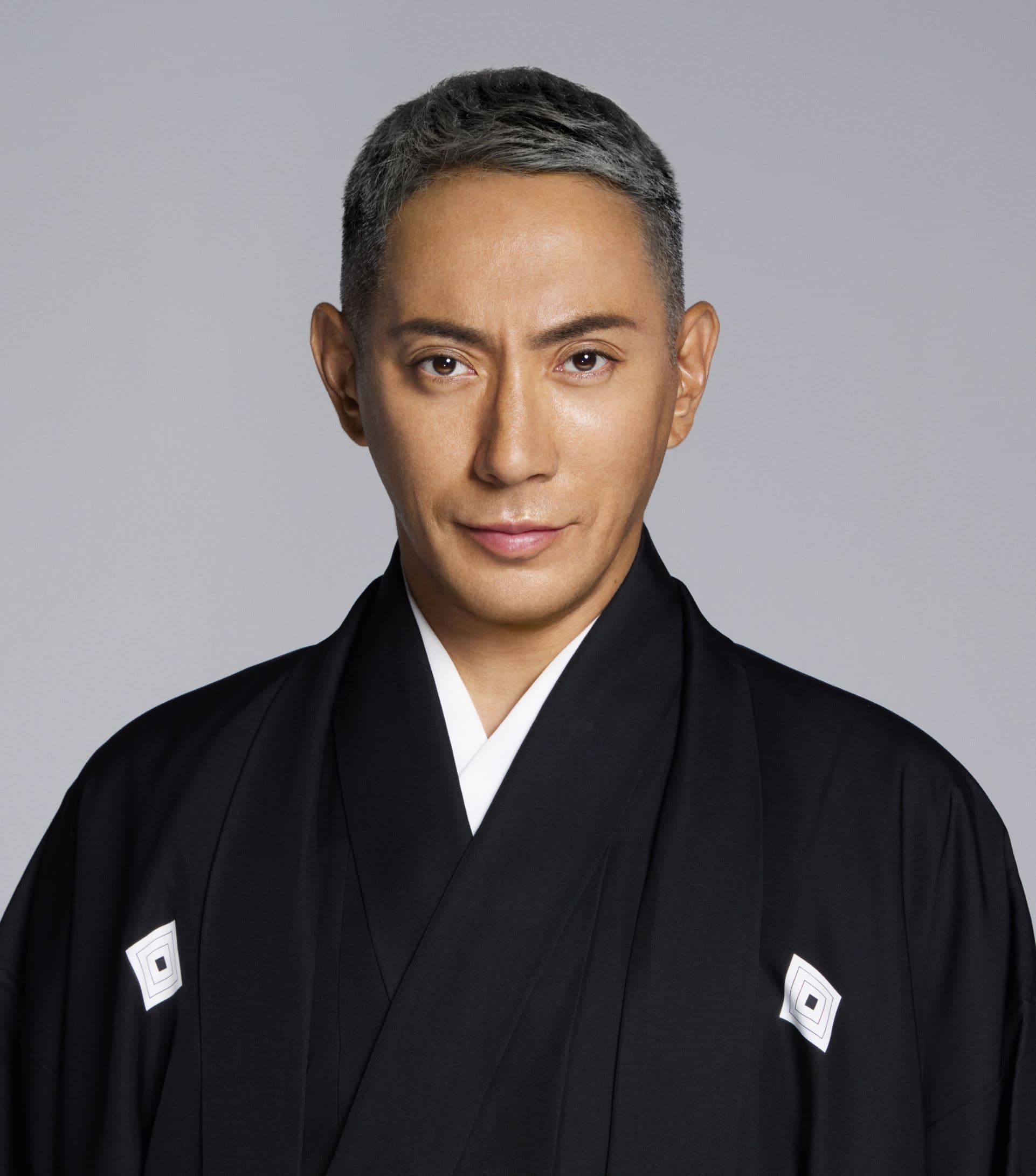
A kabuki actor who succeeded to 'Ichikawa Danjūrō', the hereditary name of the Ichikawa Sōke (Naritaya), and is engaged in carrying forward and developing kabuki, one of Japan's traditional performing arts. Head of the house whose art is aragoto and the Kabuki Jūhachiban.
After performing as Ichikawa Shinnosuke VII and then Ichikawa Ebizō XI, he took the name Ichikawa Danjūrō XIII (Hakuen) at the Kabukiza Theatre in November 2022. He now heads the Ichikawa Sōke, custodians of the great Edo-kabuki name 'Danjūrō', of the aragoto style, and of the Kabuki Jūhachiban repertoire.
Kabuki is an Important Intangible Cultural Property of Japan (designated 1965) and UNESCO intangible heritage (inscribed 2008); Danjūrō XIII is among the members of the Association for the Preservation of Traditional Kabuki recognised collectively as its holders (11th recognition, 2005, then as Ichikawa Ebizō XI). To succeed to the name is to take on the aragoto forms, the Kabuki Jūhachiban, the mimasu crest and the Naritaya house — and in the 2022 succession production his son made his debut as Ichikawa Shinnosuke VIII.
Alongside classical performance, he extends his work beyond the theatre — the ABMORI tree-planting project, film and digital media, and introducing kabuki to audiences overseas. He also creates works that record the performing body, such as theatre photography and oshiguma face-prints.
What They Inherit
What he inherits is the Danjūrō name and the aragoto forms handed down since the Edo period. What he adds is a translation of kabuki into the language and media of our own time, to pass on for the next hundred years.
IN JAPANESE CULTURE
Where the Ichikawa Sōke, Naritaya, the Kabuki Jūhachiban and aragoto stand within Japan's traditional performing arts and Japanese culture — inheritance, present-day work, the next generation and kabuki abroad, on sourced facts.
NAME VARIANTS
Names and spellings for this person: 市川團十郎 / 十三代目市川團十郎 / 十三代目市川團十郎白猿 / 市川団十郎 / 十三代目市川団十郎 / 市川海老蔵 / Ichikawa Danjuro XIII / Ichikawa Danjūrō XIII / Ichikawa Ebizo XI
FROM THE OFFICIAL CHANNEL
KABUKU. / Ichikawa Danjūrō.See it in his own films
【継続するコツ】舞台に立ち続ける市川團十郎のルーティン大公開!
Dec 20, 2025
How he spends the hours from waking to curtain in order to keep performing — a daily structure he says took fifteen to twenty years to build.
- 【楽屋紹介】市川團十郎が語る舞台裏|歌舞伎座の鏡台へのこだわり。The mirror stand he had made for his succession copies the first Danjūrō's, kept at Naritasan Shinshōji — a corner of the dressing room that leads back to the origin of the name 'Naritaya'.Watch on YouTube
- 市川團十郎が教える発声法|心を動かす声のつくり方A demonstration built on one idea — that voice is born from breath — which turns from stage technique into how any of us speak day to day.Watch on YouTube
- 【今すぐ実践できる】市川團十郎のセリフの覚え方He describes memorising lines not as technique but as taking on a character's interior and circumstances — a look inside the actor's actual work.Watch on YouTube
- 【抜き打ち】市川團十郎の私物チェック!歌舞伎役者のプライベート一挙公開A person seen through his possessions — the everyday objects that sit alongside the figure you meet on stage.Watch on YouTube
- YouTube再始動。市川團十郎が伝えたい“歌舞伎の心“The statement he made on returning to YouTube after three years and renaming the channel — the motive behind his current work, said plainly.Watch on YouTube
Current and Upcoming Performances
Related articles
- Film SHUMEI
A First for Japanese Cinema: SHUMEI Takes Best Film in Venice
On 11 September 2026, local time, the film SHUMEI — screened at the 83rd Venice International Film Festival — won Best Film at the festival's official independent award, the Cinema & Arts Award. It is the first Japanese film to take that prize. The award honours work that fuses cinema with theatre, music and the performing arts: a film that carried kabuki, a stage art, to a global audience took the prize that bears exactly that name.
5 min read
- Film SHUMEI
In White, in Venice: The Two Days SHUMEI Met a Global Audience
On 4-5 September 2026 the film SHUMEI screened at the 83rd Venice International Film Festival. Ichikawa Danjūrō appeared at the photocall in full stage costume, and his image was carried on the large screen outside the venue. A record of two days in which shumei — the succession of a name — stood before a global audience, untranslated.
4 min read
- Learning from Plays
Kanjinchō for Absolute Beginners: Three Ways In
Kanjinchō is the story of a fugitive lord, his loyal retainer Benkei, and a barrier keeper who sees through their disguise — and lets them pass anyway. You do not need to know the full plot. Three doorways — Benkei's lie, Togashi's silence, and the leaping exit called tobi-roppō — are enough to enjoy it fully, even on your first visit.
5 min read
- Film SHUMEI
Three Words to Know Before Watching the Film SHUMEI
Three Japanese words unlock the film SHUMEI: shūmei (name succession), myōseki (a hereditary stage name), and Naritaya (the 'house name' of the Ichikawa Danjūrō line). Five minutes with these three ideas, and what happens on screen will carry a completely different weight.
5 min read
- Film SHUMEI
Shūmei: Is It Just Inheriting a Name?
As a system, shūmei is simple to define: an actor takes over a predecessor's name and performs under it. But a hereditary name carries generations of artistry, signature roles and audience memory. This article thinks through the question — keeping verifiable fact and editorial interpretation clearly separate.
6 min read
- Learning from Plays
Aragoto: The Stylised Power Born in Edo
Aragoto — literally 'wild business' — is the bravura acting style born in Edo kabuki. Bold kumadori face paint, exaggerated costumes, thunderous mie poses: its wildness is not violence but a refined aesthetic of power that drives evil away. Credited to the first Ichikawa Danjūrō, it remains the core of the Ichikawa Sōke's art today.
6 min read
- Theatre Guide
Your First Visit to the Minamiza: A Kyoto Kabuki Guide
The Minamiza stands at the foot of Shijō Bridge in Kyoto, closest of all theatres to the riverbank where kabuki is said to have been born. Access, tickets, dress code, what to do at the interval — this guide gathers everything first-timers wonder about, ahead of the Ichikawa Danjūrō Special Performances in October 2026.
6 min read
- Learning from Plays
'Shiganē koi no nasake ga ada': One Famous Line as a Door into Edo Style
A great kabuki line stays in the ear even before you grasp every word. 'Shiganē koi no nasake ga ada' — the opening of Yosaburō's famous speech in Yowa Nasake Ukina no Yokogushi — is the classic example. Let its seven-five rhythm be your doorway into Edo chic, and into this play.
5 min read
- KABUKU Philosophy
KABUKU: To Lean, and to Live
Kabuku is an old Japanese verb meaning 'to lean' — to tilt away, deliberately, from the upright and expected. Around 1600, flamboyant nonconformists called kabukimono 'leaned' against convention, and their name is held to be the origin of the word kabuki. Here we set out the historical facts, and then — clearly separated — a modern reading.
6 min read