kanteiryū
勘亭流
かんていりゅうthe rounded lettering style of kabuki signage
INSTANT ANSWER
Kanteiryū is the thick, rounded lettering of kabuki signboards and programs, written without gaps in the auspicious hope of a packed house.
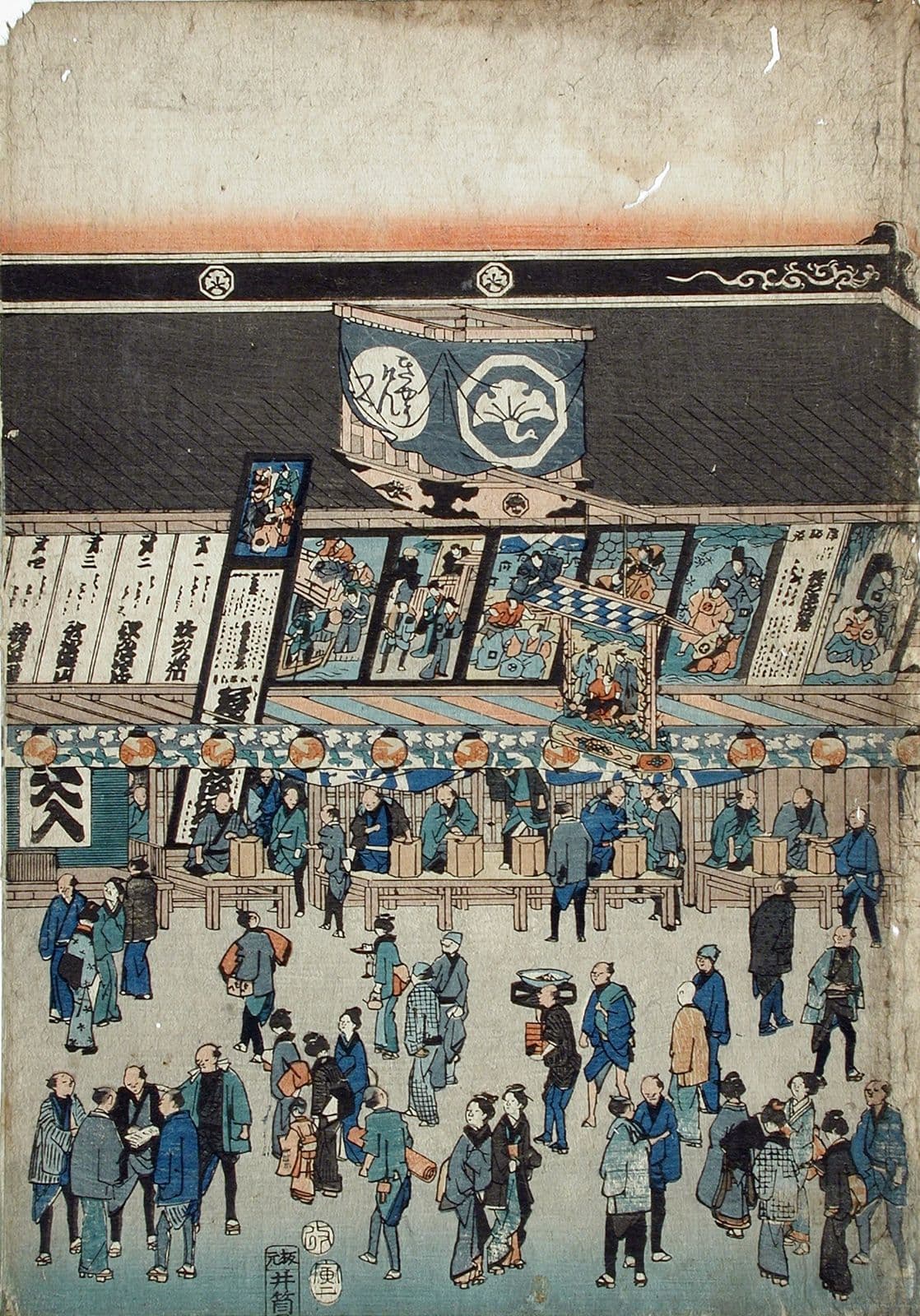
Kanteiryū is the distinctive lettering of kabuki signboards and playbills, also called shibai moji, "theatre letters." Said to be an exaggerated development of the official Oieryū hand of the Edo period, it is thick, rounded, and undulating in stroke.
In 1779 the scribe Okazakiya Kanroku is said to have written the New Year signboard for the Nakamura-za, and the style took its name from his sobriquet, Kantei. By auspicious custom it is written without gaps, the strokes hooking inward as if to beckon the audience in—a brush-borne prayer for a full house.
Kanteiryū is one of the lettering styles known collectively as Edo moji, raised by Edo's entertainment culture. The yose variety halls have their Tachibana-school yose moji, sumo its Negishi-school sumō ji—all written thick and gapless in hope of a full house, yet each grown into a distinct form in its own world. One glance at the lettering tells you the entertainment: a stylish device of Edo.
Kanteiryū still adorns kabuki's signboards, maneki placards, and program titles—the very face of the theatre. At productions from name-succession celebrations onward, the name Ichikawa Danjūrō too is raised in these letters, conveying at a glance the festive bustle of the theatre since Edo.
Read this next
These words meet on the same stage. Knowing one makes the next easier to see.
- 番付・筋書banzuke / sujigakiBanzuke are kabuki's traditional playbills; their descendants are today's theatre programs, called sujigaki in Tokyo.Read
- 櫓yaguraThe yagura is the tower structure raised above a playhouse entrance—once the exclusive mark of an officially licensed theatre and the symbol of its right to perform.Read
- 顔見世kaomiseKaomise is the annual "face-showing" production that introduced a theatre's newly assembled troupe—once the most important event of the kabuki year.Read
Sources & Supervision
- Author
- KABUKI Universe Editorial Team
- Supervision
- Ichikawa Danjūrō
- Published
- Aug 16, 2026
- Updated
- Sep 9, 2026
Supervision means Ichikawa Danjūrō has reviewed this page's intent and key points. The text is the editorial team's writing, not Ichikawa Danjūrō's own statements. Editorial responsibility rests with the team, which corrects any error. Read the editorial policy