kaidan-mono
怪談物
かいだんものkabuki's ghost plays
INSTANT ANSWER
Kaidan-mono are kabuki's ghost plays, traditionally staged in summer; Tsuruya Nanboku's Tōkaidō Yotsuya Kaidan stands as the genre's masterpiece.
Kaidan-mono are kabuki plays in which ghosts and apparitions walk. Traditionally a genre of summer programming—a chill against the heat—they tell stories of grudge and karmic retribution through keren-laden staging: quick changes, trick scenery, and startling stage machinery.
The genre's masterpiece is Tōkaidō Yotsuya Kaidan by Tsuruya Nanboku IV, said to have premiered at the Nakamura-za in Edo in 1825. The vengeful spirit of Oiwa, betrayed and destroyed by her husband, materializes through celebrated effects—the hair-combing scene, the ghost emerging from a lantern.
When Tōkaidō Yotsuya Kaidan is staged, the cast customarily pays its respects at shrines and temples associated with Oiwa, such as the Oiwa Inari Tamiya Shrine in Yotsuya, Tokyo. The custom—praying for a safe run and honoring Oiwa—tells how kabuki's ghost plays have been handed down with an awe and reverence that reach beyond the stage itself.
At that premiere the role of Oiwa's husband, Tamiya Iemon, is said to have been taken by Ichikawa Danjūrō VII. That the Danjūrō name stands on the very first page of kabuki's ghost-play lineage speaks to the breadth of the family's art.
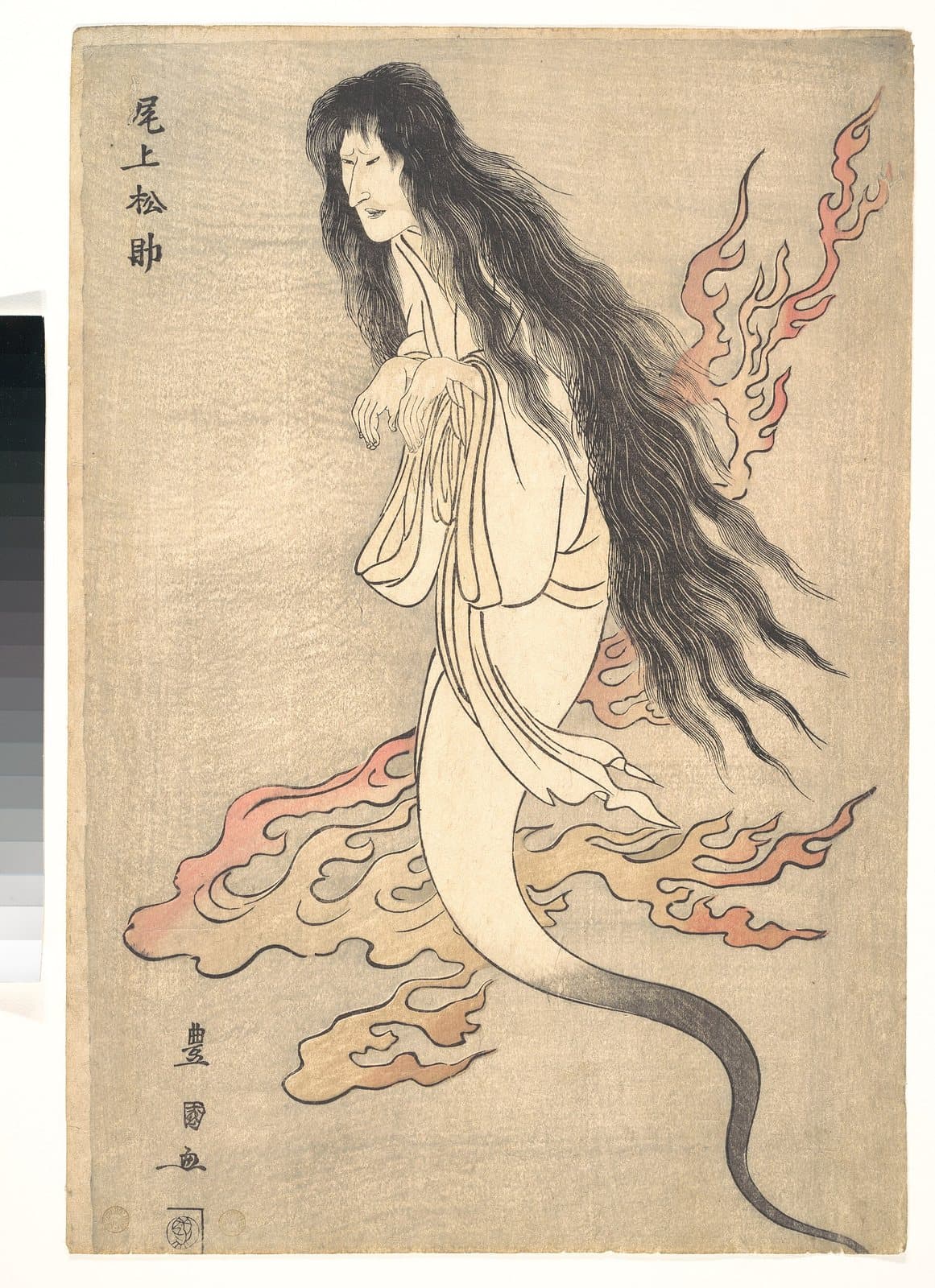
Plays Where You Can See It
Read this next
These words meet on the same stage. Knowing one makes the next easier to see.
- ケレンkerenKeren is the umbrella term for kabuki's spectacular tricks—flying entrances, lightning costume changes, real water—prizing speed, thrill, and surprise.Read
- 早替わりhayagawariHayagawari is the quick-change art in which one actor plays two or more roles in a single scene, transforming in moments.Read
- 生世話物kizewamonoKizewamono are the most sharply realistic of kabuki's domestic plays, depicting the raw life and lower depths of the Edo townsman's world.Read
- 白浪物shiranami-monoShiranami-mono are kabuki's "thief plays"—dramas with charismatic robbers as their heroes, which flourished at the end of the Edo period, above all in the work of Kawatake Mokuami.Read
Sources & Supervision
- Author
- KABUKI Universe Editorial Team
- Supervision
- Ichikawa Danjūrō
- Published
- Aug 16, 2026
- Updated
- Sep 9, 2026
Supervision means Ichikawa Danjūrō has reviewed this page's intent and key points. The text is the editorial team's writing, not Ichikawa Danjūrō's own statements. Editorial responsibility rests with the team, which corrects any error. Read the editorial policy