takemoto
竹本
たけもとgidayū narrative music performed in kabuki
INSTANT ANSWER
Takemoto is gidayū narrative music as performed in kabuki: a chanter and thick-necked shamisen carry the story in plays adapted from the puppet theatre.
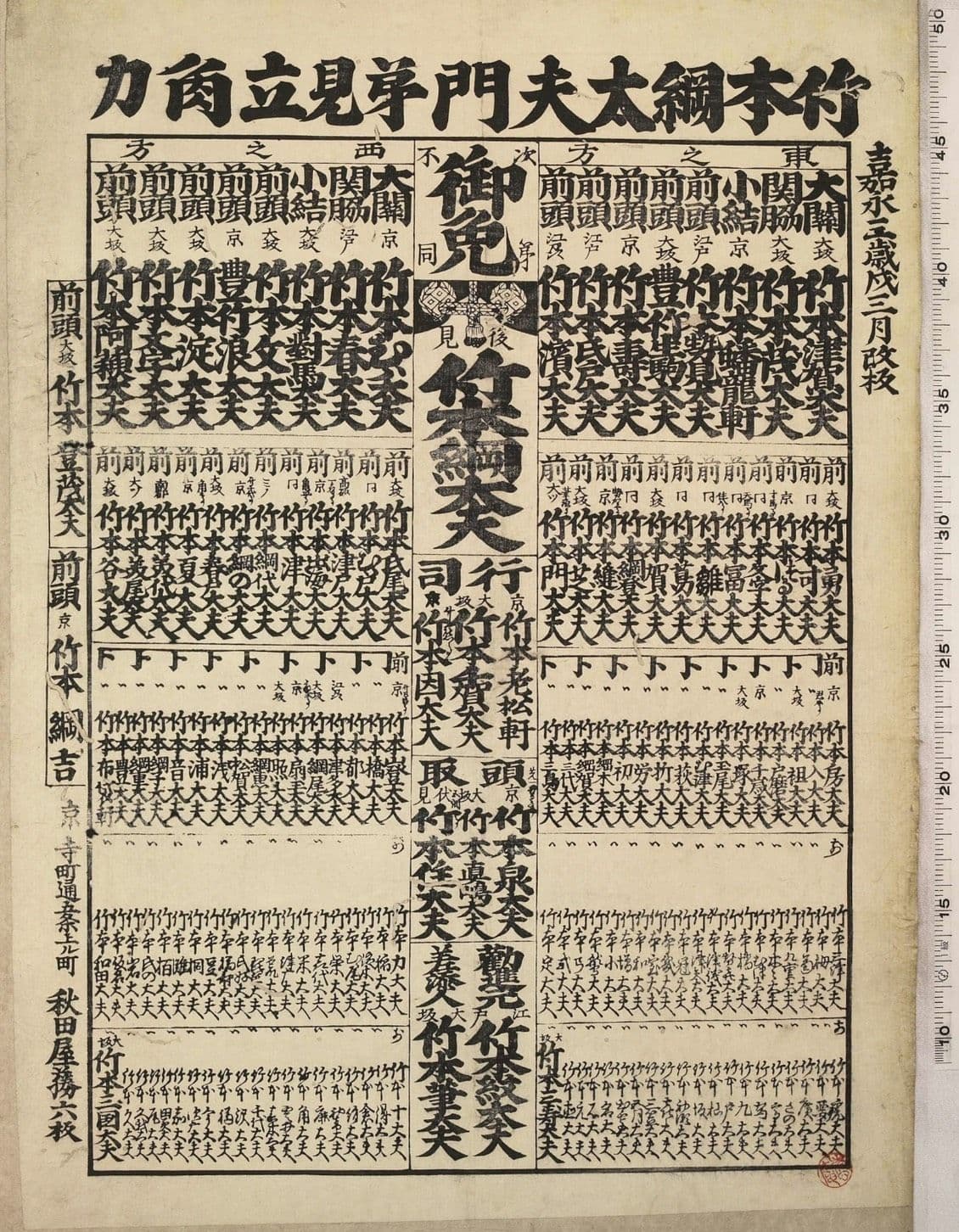
Gidayū-bushi is the school of narrative chanting said to have been founded by Takemoto Gidayū in Osaka, developed as the music of the puppet theatre. When gidayū is performed in kabuki, it is called takemoto after its founder's name; in older usage it was also known as chobo.
Takemoto is indispensable to gidayū kyōgen—plays adapted into kabuki from the puppet theatre. The chanter narrates scenery and inner feeling and drives the plot forward, breathing in unison with the actors; that union of narration and acting is its essence.
The old name for takemoto—chobo—is said to come from the playbook itself: the passages for the chanter were marked with small dots, called chobo, beside the text. The word later carried a slighting ring, it is said, and today the respectful name takemoto is the norm.
Takemoto belongs not to any one acting house but to kabuki as a whole. Centered on the great history plays, it continues to underpin the stages of every actor—including the Ichikawa Sōke—today.
Read this next
These words meet on the same stage. Knowing one makes the next easier to see.
- 長唄nagautaNagauta is the lyrical school of shamisen music that grew up with Edo kabuki, accompanying dance and coloring scenes throughout the play.Read
- 三味線shamisenThe shamisen is the three-stringed, plectrum-struck instrument at the heart of kabuki music, built in thin-, middle-, and thick-necked types for different musical styles.Read
Sources & Supervision
- Author
- KABUKI Universe Editorial Team
- Supervision
- Ichikawa Danjūrō
- Published
- Aug 15, 2026
- Updated
- Sep 9, 2026
Supervision means Ichikawa Danjūrō has reviewed this page's intent and key points. The text is the editorial team's writing, not Ichikawa Danjūrō's own statements. Editorial responsibility rests with the team, which corrects any error. Read the editorial policy